Showing posts with label Yasujiro Ozu. Show all posts

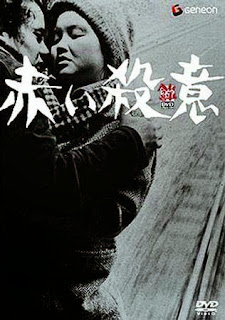
赤い殺意 - Intentions of Murder

"Get out you child of a whore." Kinu

"Get out you child of a whore." Kinu

☆ Masterpiece 


赤い殺意 - Intentions of Murder (1964) is a powerful film about Japan's traditional past and its modern present.

Directed by Shôhei Imamura.

Starring Masumi HarukawaKō Nishimura and Shigeru Tsuyuguchi among many others.


It took me three painful, introspective filled viewings to finish watching Intentions of Murder. Imamura had me constantly thinking and connecting my past with his lead female characters life. Probably the best of the Japanese New Wave directors of the 1960's. Shôhei has a way of filling his story with dualism. In this case Japan's traditional past with its modern technological present that eschews and ignores its rigid traditions. Imamura combines dark comedy with poignant, realistic drama to create truly memorable, haunting and disturbing scenes.

Imamura female lead, Masumi goes through hell and back and manages to win against all odds. Harukawa's character is born into a condemned life of servitude and humiliation to a family that treats her better than the mice in a cage. Cinderellas cruel step mom and sisters are a loving family compared to this sadistic lot. Shôhei's Japan is the complete opposite of Yasujiro Ozu's, Sanma No Aji - An Autumn Afternoon (1962).  Where Ozu's Japanese traditional past and its modern technological present are beautiful, clean and inviting, Imamura's Japan's past and modern present are dirty, ugly and evil. This is a movie with mountains of subtle irony and thought provoking introspection. Those who can endure the full movie will be richly rewarded. The black and white cinematography is stunning and adds to the evil lurking below the facade.

In the rape scene below watch how Imamura assault's Japan's traditional past of family honor above all. Masumi's character has to endure repeated rapings in silence to protect her adopted families honor.


Trivia - Shôhei in talking about his films says, "I am interested in the relationship of the lower part of the human body and the lower part of the social structure... I ask myself what differentiates humans from other animals. What is a human being? I look for the answer by continuing to make films"


  • ALT
  • ALT
  • ALT
  • ALT
  • ALT
  • ALT
  • ALT
  • ALT
  • ALT
  • ALT
  • ALT
  • ALT
  • ALT
  • ALT
  • ALT
  • ALT
  • ALT
  • ALT
  • ALT
  • ALT

Bom Yoereum Gaeul Gyeoul Geuringo Bom - Spring, Summer, Fall, Winter & Spring

"Lust awakens the desire to possess. And that awakens the desire to murder." Old Monk

"Lust awakens the desire to possess. And that awakens the desire to murder. " Old Monk

Masterpiece

Spring, Summer, Fall, Winter and Spring - Bom Yeoreum Gaeul Gyeoul Geuringo Bom (2003) is a South Korean enraths the viewer from beginning to end.

Directed and acted in the last scenes by Kim Ki Duk.

Starring Oh Young Soo and Seo Jae Kyung among others.

Kim's film reminds me of Yasujiro Ozu's, Sanma No Aji (An Autumn Afternoon). Kim weaves the most simple, wonderous and meditate film I have ever had the pleasure of viewing as an audience member and as an actor. Kim uses the seasons to illustrate the cyclical journey of life. Buddhism idealogy is subtly embedded throughout the film to help us understand the story and its characters journey through nature's endless circular seasons.

As an audience member I was transported to a world filled with wisdom, serentity and majestic beauty. I'm not a Buddhist so the symbols that are subtly put into each scene were seen by me, but not fully understood. My lack of Buddhism in no way affected the journey Kim was taking me on. I just sat back and took Kim's journey and promised myself to research the Buddist symbolism after the film ended. I located a simple guide to the Buddhism symbols throughout Kim's film and I'm sharing it with you. Please watch the film before reading the link. Let the film speak to you at your level. Then after your first viewing be amazed and surprised at how many different Buddhist symbols Kim subtly put throughout the film to help his audience in their journey with the characters.

As an actor I was fascinated by the lack of dialogue throughout the film. The key to the acting in this film is the wonderful chemistry and subtext that Kim helps the actors achieve in each scene. Kim did a wonderful job with Seo Jae Kyung who plays the young boy in the first season of the film. Seo's emotional range shows an acting instrument well beyond his years. When I see young performers achieving such heights in their characters emotional life I give credit to the director who helped guide them there. Enjoy!


Trivia - None of the main characters in the film have names. Buddhist abandon the idea of the self and become part of the whole of existence.